
Key Takeaways
- Aluminum extrusion quality control ensures consistency, precision, strength, and reliability.
- PPE verifies dimensions, tolerances, and surface finish through a variety of advanced inspection methods.
- Strict industry standards for aluminum extrusions such as ASTM-B-221 and AMS-QQ-A-200/8 guide process consistency and traceability.
- Continuous improvement and documentation guarantee high-precision extrusions for demanding applications.
Introduction
When it comes to precision aluminum extrusion manufacturing, quality control isn’t optional at Profile Precision Extrusions. It’s the foundation of our success. Every critical dimension, tolerance, surface finish, or alloy specification must meet specifications of our customers to ensure their products perform flawlessly in aerospace, medical, and industrial applications. In this article, we’ll explore how aluminum extrusion quality control processes are implemented at every stage — from billet selection to final inspection — to deliver components that meet the highest standards of accuracy and performance.
How Do Manufacturers Ensure Quality Control in Precision Aluminum Extrusion Production?
The key to reliable aluminum extrusions lies in a comprehensive quality control system that spans the entire manufacturing process. At PPE our Quality Management System is AS9100_D registered, a globally recognized standard. It signifies that PPE takes a proactive approach to identifying defects and minimizing risks.
Quality starts well before extrusion with careful selection of raw materials and carries through extrusion, artificial aging, and every subsequent process to ensure each part meets the customer’s specifications.
PPE relies on tried and true inspection techniques using tools like calipers & micrometers. We also utilize high precision tools like our Micro-Vu optical measurement machine and Hexagon coordinate measuring machines (CMM). By verifying extrusion tolerances against customer drawings for their aluminum extrusions our team ensures each profile meets strict dimensional and mechanical criteria.
Finally, rigorous documentation and traceability reinforce consistency. PPE issues a material certification with every order that states the actual chemical composition, specification(s) used to produce the order and a lot number traceable back to the production of the raw material (billet)
Key Stages of Aluminum Extrusion Quality Control
1. Pre-Production Material Verification
Quality starts with the right alloy. All billet is stamped with the alloy designation and vendor lot number. Each vendor lot number is traceable to a certified chemical composition report, which is kept on file indefinitely.
Our manufacturing software, used by over 200 aluminum extrusion companies worldwide, is used to plan each order. A written work order is developed with parameters for each manufacturing step from heating the billets to packaging instructions.
2. Process Monitoring During Extrusion
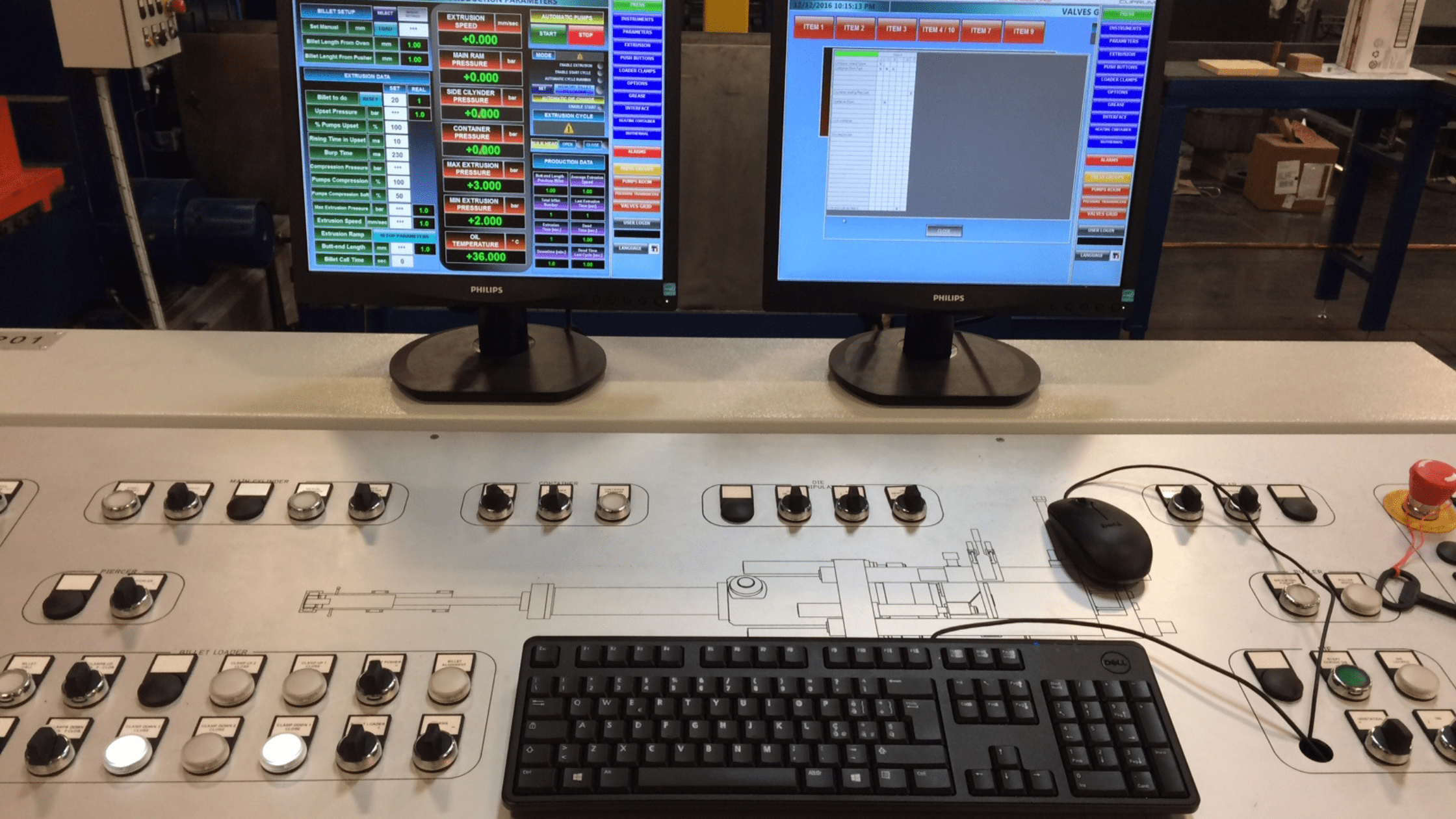
Precise control of billet temperature, ram speed, exit temperature and cooling rate is essential. Operators continuously monitor these parameters to maintain surface quality, consistent dimensions, and acceptable mechanical properties. Real-time monitoring helps identify deviations before they affect the finished product.
3. Extrusion Tolerance Verification
Once extrusions are produced, they undergo dimensional inspection — the process of confirming that each dimension falls within acceptable limits. High-precision measuring equipment such as calipers, micrometers and optical comparators are used to confirm critical dimensions are within tolerance. If necessary, we can utilize a CMM which is capable of micron-level measurement accuracy. These steps ensure every extrusion fits seamlessly into its end-use assembly, whether it is used in an RV slideout or cardiac stethoscope.
4. Surface Inspection and Defect Detection
Throughout our process, each part is visually inspected to identify imperfections like scratches, blisters, or die lines. Maintaining surface integrity is crucial for applications that require both functional and aesthetic quality.
5. Post-Production Testing and Standards Compliance
After extrusion and artificial aging, extrusions may undergo mechanical testing — including yield strength, tensile strength, and elongation % — to verify compliance with customer and industry specifications. Documenting every test result supports full traceability and demonstrates a commitment to continuous improvement.
Why Quality Control Matters for Precision Extrusions
In industries like aerospace, defense, and healthcare, a fraction of a millimeter can determine performance and safety. Rigorous quality control ensures that each aluminum extrusion is reliable, uniform, and fit for its purpose. Beyond meeting specifications, robust QC builds trust with engineers and procurement teams who depend on consistent results across every order.
Conclusion: Precision You Can Measure
At Profile Precision Extrusions, quality control is built into every step of the extrusion process — from alloy certification to final inspection. Our comprehensive approach ensures that each profile meets our customers’ standards for tolerance, strength, and finish.
If you’re looking for a trusted partner who delivers precision aluminum extrusions with proven quality assurance, contact us to discuss your next project or request a custom quote today.